
What To Consider Before You Store a Boat for the Season
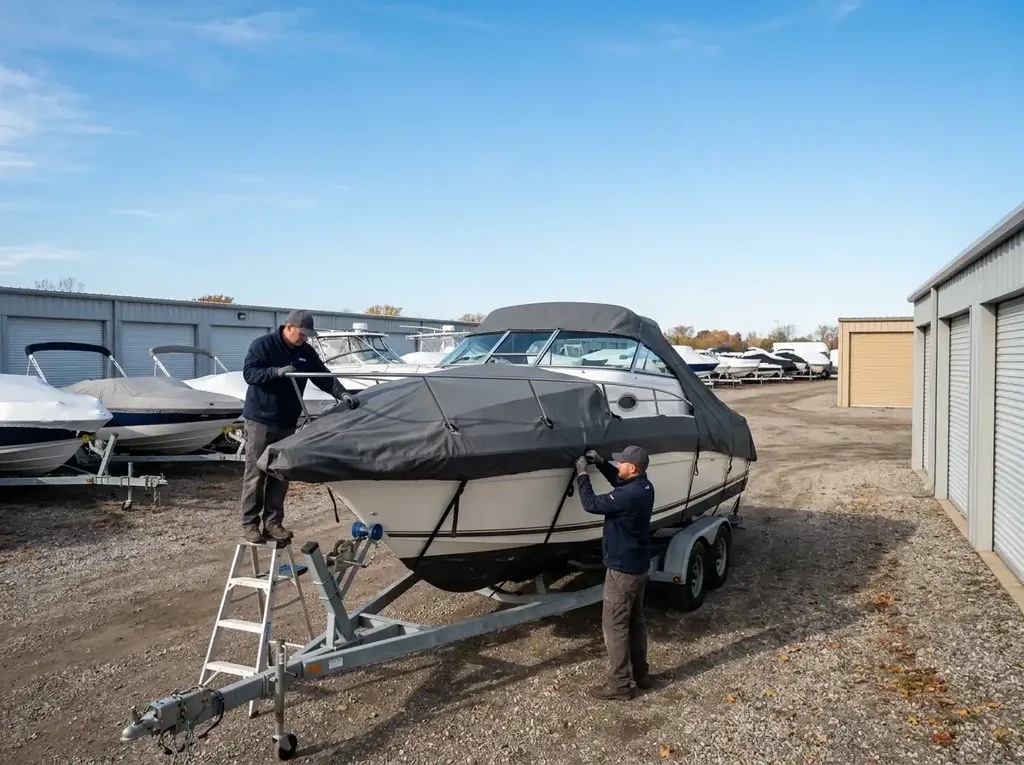
A 20-foot fishing boat on a tandem-axle trailer can eat up most of a two-car driveway, and that's before you account for the tongue sticking out past the property line. For a lot of boat owners, the driveway works fine on a launch weekend, but as a permanent parking spot between outings it gets old fast. Renting the right boat storage space means the boat and trailer move off your property, and you get your driveway back until the next trip to the water. Before you reserve a space, though, there are a few things worth thinking through so you end up with a unit that actually fits your setup.
Measure the Boat and the Trailer Together
This is the step people skip, and it's the one that causes the most headaches at check-in. The length of your boat alone tells you almost nothing useful. What matters is the total length of the rig, which means the boat, the trailer frame, and the hitch coupler combined. On a typical 18-foot center console, that full measurement can push 24 feet or more once the trailer tongue is included. Add a bow-mount trolling motor, a swim platform extension, or a kicker motor on the transom, and the number climbs further.
Width matters too. Measure at the widest point of the hull, then check whether your trailer fenders extend beyond that. When you're comparing storage spaces, confirm the stall width, not just the length, so you're not squeezing past a neighboring trailer every time you visit. Our storage size guide can help you match your rig's dimensions to the right space before you commit.
Covered Versus Open Storage: What the Difference Actually Means
Open outdoor spaces are the most common option for boat storage, and for a lot of owners they work perfectly well. The boat sits on its trailer under the sky, the price is lower, and the access is usually straightforward. A good boat cover does most of the protective work in an open space: it keeps debris out of the cockpit, blocks UV exposure on upholstery and gel coat, and sheds rain so water doesn't pool inside the hull.
Covered storage adds a roof over the space without fully enclosing it. That overhead protection reduces direct sun exposure on the cover and hull finish, and it keeps heavy snow from loading up on top of the boat during a Wisconsin or Colorado winter. If you're storing a fiberglass hull with a newer paint job or a boat with a canvas top you'd rather not replace early, a covered space is worth the additional cost. Check what the facility actually offers before assuming covered spaces are available; not every location carries them.
Offseason Storage Versus In-Season Storage
Plenty of boat owners think of storage as a winter-only arrangement, but the calculus changes when you look at how often the boat actually goes out. A lake boat that launches four or five times a summer spends far more time on the trailer than on the water. Keeping it in a storage space between those outings frees up the driveway, removes it from the view of neighbors and HOA boards, and reduces the wear that comes from sitting exposed for weeks at a time.
For true offseason storage, the priorities shift slightly. You'll want a space long enough to store the boat with the motor tilted down or with a motor cover in place. You'll also want easy access in early spring so you can get the boat out for pre-season maintenance, run through the engine, and check the trailer bearings before the first launch of the year. Our facilities with flexible month-to-month leases make it easier to start and end the rental on your actual schedule rather than a fixed calendar.
Storage Lion offers boat storage at several locations across the regions we serve. If you're in the Fox Valley area of Wisconsin, our boat storage spaces in Appleton are a practical option for lake-bound rigs that need a home between outings on Lake Winnebago and the surrounding waters. Boaters in southwest Missouri and the surrounding Four State area can look at our boat storage options in Joplin, MO, for rigs heading to Grand Lake O’ the Cherokees or Stockton Lake.
Finding the Right Space Near You
Once you've measured the rig, thought through covered versus open, and decided on the lease structure that fits your season, the last step is finding a location that's convenient to your route to the water. A storage facility that's well out of your way will start to feel like a burden by mid-summer. Ideally, the space sits somewhere between home and the boat ramp so the detour is minimal.
You can browse all of Storage Lion's available locations to find a facility near your home or your preferred launch point. The right boat storage unit is the one that fits your trailer's dimensions, gives you the access you need on launch day, and keeps the boat off the driveway for the rest of the season without adding friction to every trip. Getting those details right before you reserve the space saves a lot of trouble once the water opens up.