
RV Storage: Outdoor, Covered, or Indoor—How To Choose
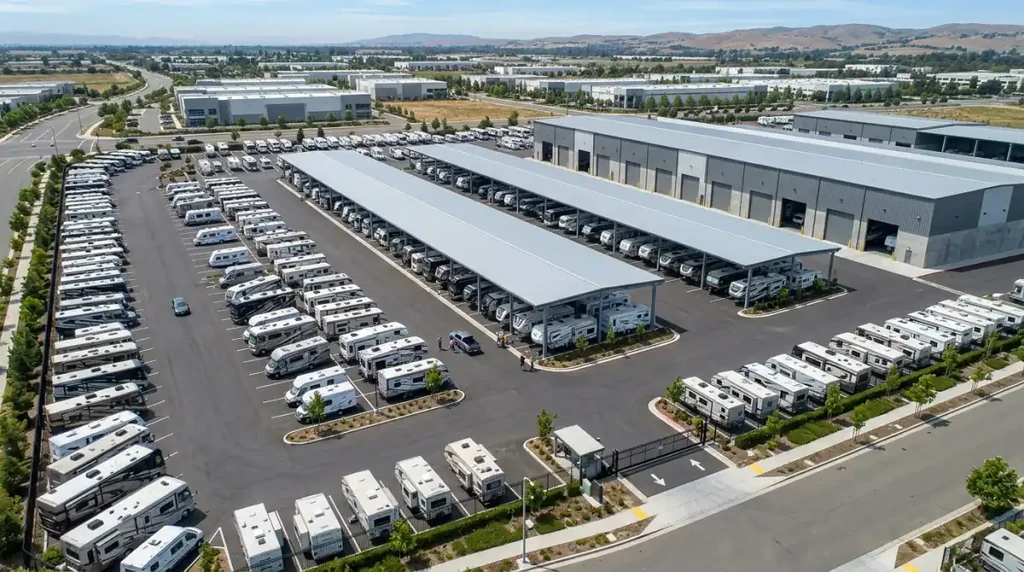
So your RV, boat, or travel trailer sits in the driveway for eight or nine months a year. Is there a better place for it to wait between trips? The answer depends on what you're storing, how long it will sit, and how much protection you actually need. This guide breaks down the three main RV storage options—outdoor, covered, and indoor—so you can match the right format to your rig before the offseason settles in.
Why the Driveway Is Not a Long-Term Plan
A vehicle you only use a few months a year still takes up space year-round. Beyond the inconvenience, there are real practical reasons to move your vehicle off your property. Many homeowners association agreements restrict oversized vehicles in residential driveways, and some municipalities have their own ordinances about street or driveway parking for trailers and motor homes. Even without those restrictions, a fifth wheel or motor home parked in the driveway through a full winter collects UV damage, road film, and weather wear that adds up faster than most owners expect.
A dedicated storage spot gives your rig somewhere to wait between seasons, not in your front yard, and frees up your driveway for everyday use. The right type of space, outdoor, covered, or enclosed, depends on your vehicle, your budget, and how much protection you want.
Outdoor Parking: The Basics
Open-air outdoor parking is the most common and most affordable RV storage option. Your vehicle parks on a paved or gravel lot, exposed to the elements, but off your property and typically behind a secured perimeter. This works well for owners who store their rig for shorter periods, plan to access it frequently, or are working with a tighter budget.
The trade-off is exposure to UV rays, rain, or snow. If you go this route, a quality RV cover is worth the investment. A cover reduces sun and debris exposure significantly between visits. Outdoor spots also tend to accommodate the widest range of vehicle sizes, which matters for longer fifth wheels, large motor homes, and boats on trailers.
Covered Storage: The Middle Ground
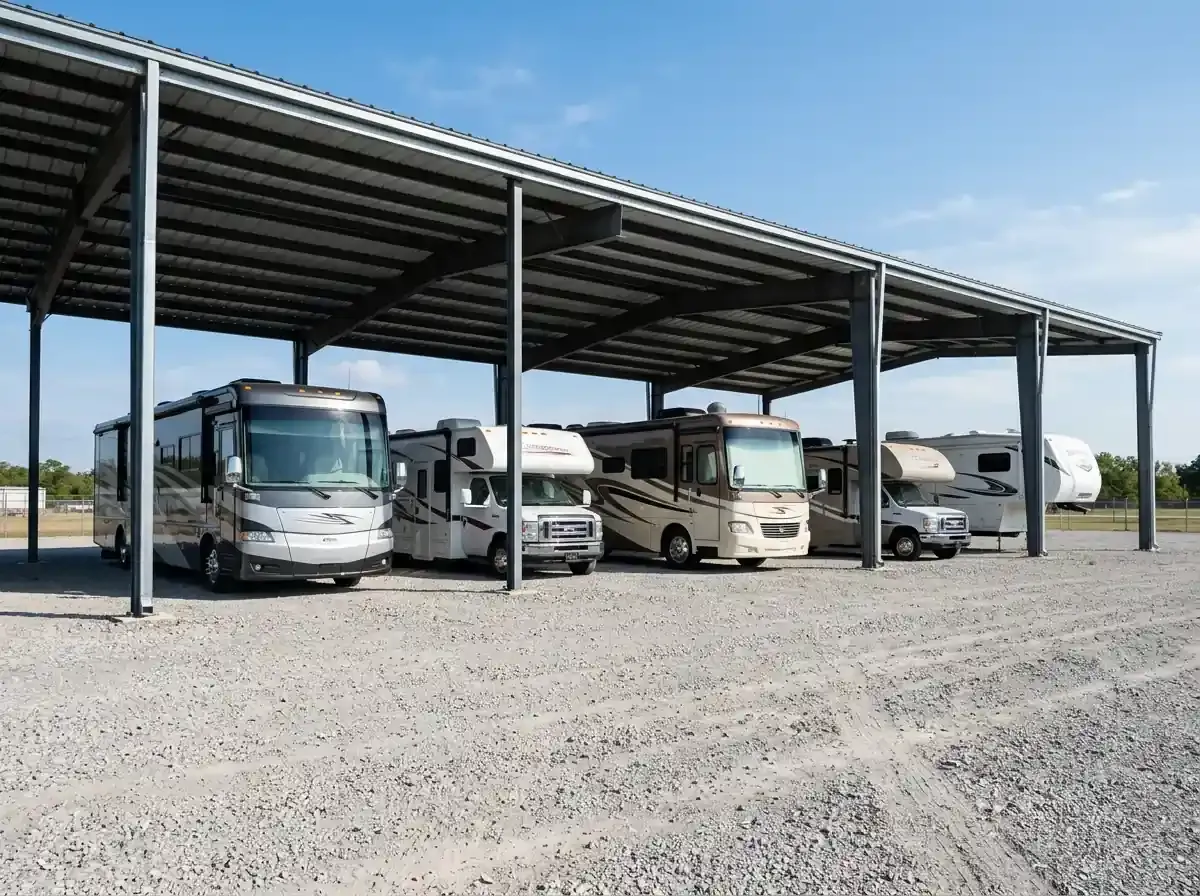
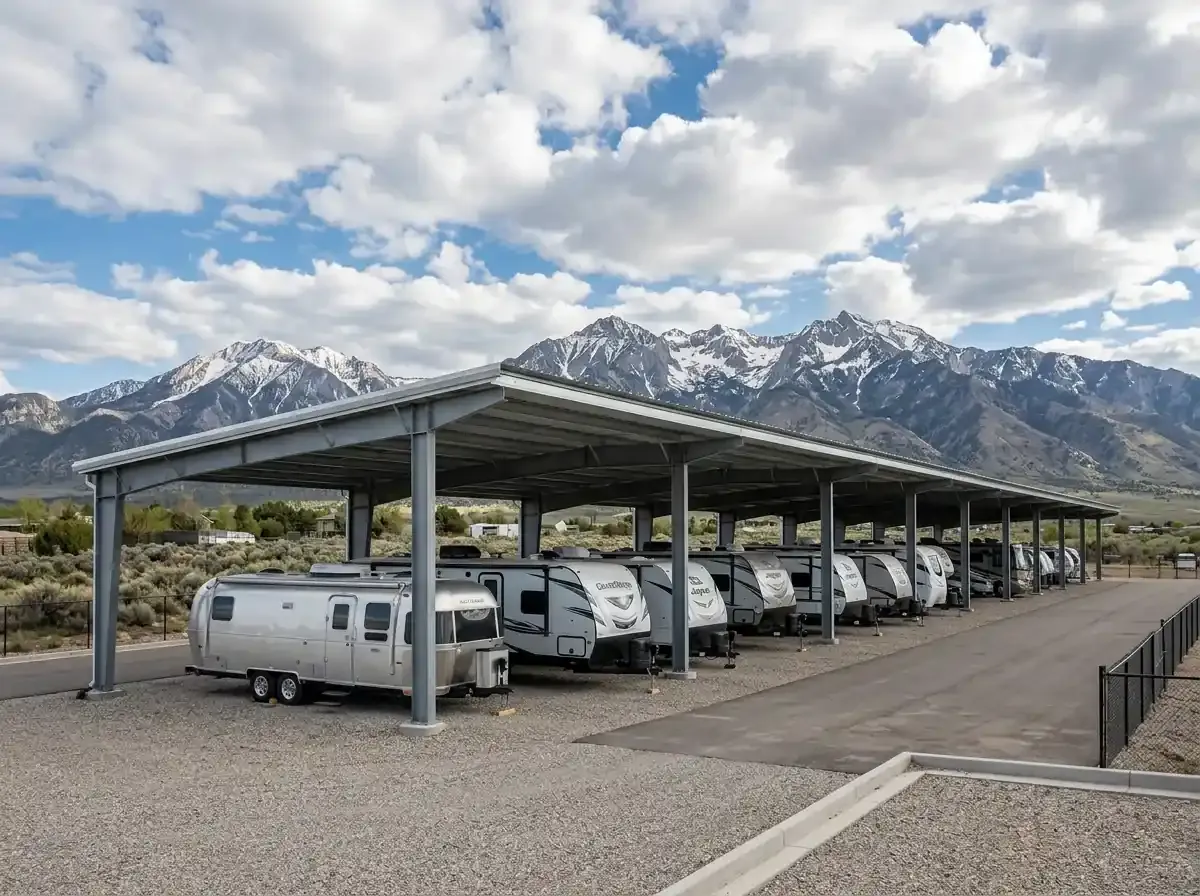
Covered storage sits between open parking and a fully enclosed unit. You park your vehicle under a roof or carport structure, protected from direct sun and precipitation, but open on the sides. For most owners in climates with strong seasonal swings, this format offers a meaningful upgrade from outdoor parking without the cost of a full indoor unit.
A covered spot keeps rain and snow off the roof, reduces UV exposure on top surfaces, and helps prevent standing water from working its way into seams and vents over a long winter. It’s a practical choice for ski boats, fishing boats, personal watercraft like Jet Skis, and midsize travel trailers that don't require climate control but still benefit from overhead protection.
If you store a motorcycle, ATV, or classic car and want more than an open lot but don’t need a fully enclosed bay, covered storage is often the right fit. It keeps your vehicle out of direct weather without the premium of a fully enclosed space.
Indoor Storage: Maximum Protection
A fully enclosed indoor unit offers the highest level of protection available for vehicle storage. Your vehicle is inside a building, shielded from wind, precipitation, and temperature swings. This matters most for vehicles particularly susceptible to weather damage, classic cars with original paint and chrome, motorcycles with leather seats or chrome finishes, and boats with electronics or upholstery that degrade with repeated exposure.
Indoor vehicle storage is also a good choice for anything you plan to store for an extended period without regular check-ins. You can find enclosed vehicle storage options at several Storage Lion locations across our markets.
Preparing Your Vehicle Before It Goes Into Storage
Regardless of which format you choose, a little preparation before drop-off pays off significantly when you pull the vehicle back out. For RVs and motor homes, that means draining the water system, checking the roof seals, and running the engine before a long storage period. Adding fuel stabilizer to a full tank prevents gumming in the fuel system during several months of inactivity.
Boats benefit from a freshwater flush of the engine cooling system, a full bilge drain, and a cover that fits properly. For motorcycles and ATVs, disconnect the battery or connect a trickle charger, inflate tires to the recommended storage pressure, and add fuel stabilizer to the tank. Classic cars stored for a full season should have the battery on a maintainer and the tires checked for flat-spotting if the vehicle will sit without being moved.
These steps are not complicated, but skipping them is how owners end up with a dead battery, a cracked seal, or a fuel system that needs professional attention before the vehicle is road-ready again. A little time before storage saves a lot of time in the spring.
Sizing Your Storage Space
Getting the right size spot is as important as choosing the right format. A compact fishing boat on a trailer fits comfortably in a space sized for a standard vehicle. A class A motor home or a large fifth wheel needs a pull-through or extra-long space that not every facility offers. Measure your rig’s length, width, and height if you’re considering an enclosed unit before you reserve a spot.
Storage Lion's unit size guide is a useful starting point for matching your vehicle to the right space. If you’re also storing gear alongside the vehicle, like kayaks, camping equipment, or tow accessories, factor that into the footprint you need.
Boat owners who need dedicated space can also explore boat storage options specifically, which are sized and configured for vessels on trailers rather than standard vehicle footprints.
Finding the Right Location
Proximity matters when you’re pulling a large trailer in and out seasonally. A storage facility reasonably close to your home or typical launch point makes the seasonal swap much easier. Storage Lion operates facilities across Wisconsin, Arkansas, Missouri, and Colorado, so you'll likely find options near you no matter where you’re based.
You can browse the full list of Storage Lion locations to find a facility near you, filter by the type of vehicle storage available, and reserve a spot online. Month-to-month leases mean you’re not locked into a commitment that outlasts your storage needs. Rent through the offseason and clear out when the season opens back up.
The right RV storage option fits your vehicle, your access habits, and your budget. Outdoor parking keeps costs low and works well for frequent access. Covered storage adds overhead protection for vehicles that sit through a full winter. Indoor storage is best for high-value or long-term storage when you want the vehicle fully enclosed. Choose the format that matches what you need, prep the vehicle properly before it goes in, and your rig will be ready to go when the season opens again.